Welcome Alina !
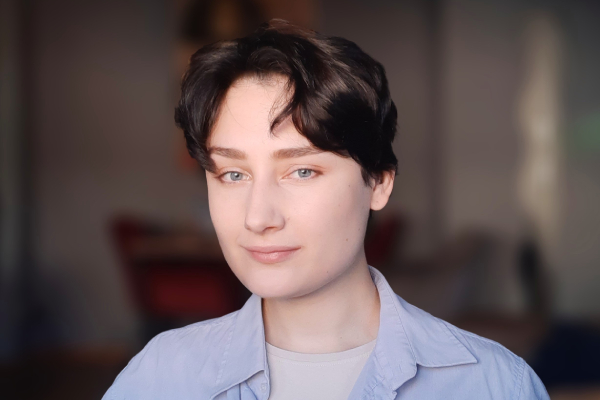
Alina Mamedova will be joining the University of Dresden in September 2025 as a Doctoral Candidate.
In the framework of the MonaLisa project, Alina will spend 3 years working on “Implications of Lateral Motor Movement on Microtubule Twist and 3D Cargo Transport “, while participating in many trainings and network events.
Read the following introduction to get to know her:
Tell us more about your background!
I am 25 years old, I was born in Kazakhstan but grew up in the Czech Republic, where I completed my undergraduate studies in Chemical Engineering at the University of Chemistry and Technology in Prague. My previous research included studying systems inspired by nature, such as nanotopographical bactericidal surfaces and hydrogel microactuators for cell mechanostimulation, in the Laboratory of Biomimetic Engineering. Outside the lab, I enjoy reading postmodern and existential literature, painting, and route climbing.
Why do you want to be part of MonaLisa?
I have always enjoyed working at the interface of different scientific disciplines, bridging knowledge from chemistry and physics to biological systems and finding parallels in fields that may seem distinct at first glance. In the end, Nature cannot be divided into neat categories, its processes are intricately interconnected across all scales. Trying to separate and simplify natural laws can feel satisfying, but it often overlooks the bigger picture. I believe that the whole is more than the sum of its parts, and that a holistic approach in science is key to real progress.
The MonaLisa project resonates strongly with these beliefs through its interdisciplinary and highly collaborative nature. What excites me most about molecular motors is the opportunity to study and learn from natural designs that have been optimized over millions of years. By understanding these mechanisms, we can not only gain insight into fundamental cellular processes but also translate these principles into the development of more efficient artificial technologies.
What are your expectations of living and working in Dresden?
Since Germany borders the Czech Republic and Dresden is only 60 km from my hometown I don’t expect major cultural differences. Still, moving to a new country is a big change and also a big opportunity. I look forward to noticing the small differences in daily life, making new connections, and exploring Dresden’s history and culture. I also look forward to becoming part of Dresden’s interconnected scientific community, as there are always talks to visit, seminars to attend and new ideas to discuss.
What do you think will be your main challenge for you in the next three years?
My main challenge will be finding the right balance between intense focus and maintaining a sustainable pace over the long term. I tend to pay a lot of attention to details, but I also want to ensure I leave space for reflection and for seeing the broader context of my work. I believe this balance will help me grow both as a researcher and as a person.

