Welcome Violette !
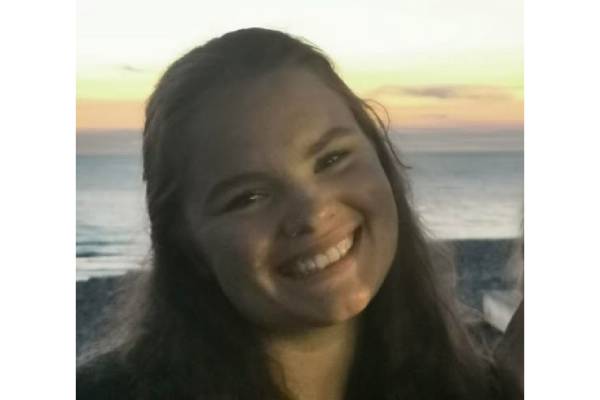
Violette Gousseau will be joining the University of Groningen in September 2025 as a Doctoral Candidate.
In the framework of the MonaLisa project, Violette will spend 4 years working on “The Molecular Motors Collective Motion in Liquid Crystals”, while participating in many trainings and network events.
Read the following introduction to get to know her:
Tell us more about your background!
I was born in Créteil, next to Paris in France in 2002 and grew up in the suburbs of Paris. In 2020, I moved to Angers where I obtained my Bachelor’s in Physics and Chemistry. In 2023, I chose to pursue my Master’s as part of the LUMOMAT program, a training focused on light-matter interactions for organic electronics and photonics. In this context, I worked with Dr. Arnaud Fihey and Dr. Julien Boixel on the design and synthesis of novels atropoisomers of dithienylethenes during my first year in Rennes. I was then welcomed in the group of Prof. Ben Feringa for my master’s thesis focused on the synthesis of new helicene-based molecular motors. In September 2025, I returned to the Feringa group as a PhD candidate working on
molecular motors and their implementation in liquid crystalline environment.
Why do you want to be part of MonaLisa?
My Master’s thesis as part of Prof. Feringa’s research group solidified my interest in molecular motors and machines, confirming my aim of participating into their research and investigation. During my first stay in Groningen, I had the chance to meet ArtMoMa PhD candidates whose enthusiasm towards the similar European consortium was catching. I am excited to be part of a research community focused on such fascinating systems.
What are your expectations of living and working in Groningen?
Having lived in Groningen for four months in the spring of 2025, I discovered an international and charming city that I am very excited to call my home for the coming years. I found the Feringa group extremely friendly, welcoming and helpful which makes me look forward to my journey as a PhD student.
What do you think will be your main challenge for you in the next three years?
Chemists often face failure and have to deal with experiments and results not going their way. Despite having been in this situation during my past research experiences, I think one of the main challenges undoubtably coming for me will be to take a step back and accept that failure and unexpected delays will happen. I will do my best to keep a positive mindset facing these types of situations.

